Since 1986 Adrian Gibbs Roofing Contractors have gained a reputation as a leading roofing specialist by providing quality flat roofing services and roof repairs to homeowners, commercial properties, government authorities and the Commercial sector.
Over the years we have built lasting relationships with many clients and homeowners including many County Council establishments and the NHS who trust us to protect them from the elements.
Expert Flat Roofing Contractors
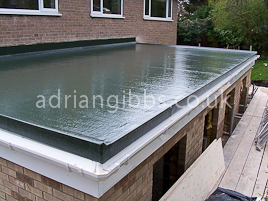
From roof leak detection to flat roof repairs and complete roof construction we have expert knowledge in high performance roofing systems including single ply roofing, traditional felt and fibreglass roofing.
Understanding roofing systems and combating common problems effectively is a vital part of our roofing service. We are dedicated to providing our customers with superior craftsmanship by continuously innovating and providing the best roofing products while remaining on the leading edge of roofing expertise.
Our vast knowledge combined with our ability to rapidly rectify roof problems has enabled us to tackle even the most problematic roofs fast and efficiently which is why we are the preferred choice by many.
Guaranteed Flat Roofing
All roofing work carries a minimum no quibble 10 year guarantee. Polyroof Fibreglass and Fatra Single Ply Systems have insurance backed manufacture guarantees of 20 and 15 years respectively.
So, if you’re looking for quality flat roofing contractors give us a call or, arrange a free quote online.

Why Choose us?
- Free Quotes
- Expert Advice
- Pay on Completion
- 10 Yr Minimum Guarantees
- Factory Trained Roofers
Our Clients
- Gwent Police Authority
- Glamorgan & Gwent NHS Trust
- International Rectifier Ltd
- Smurfit Kappa
- Torfaen County Borough Council
- Two Sisters Food Groups